Synapedia / About
Auf Deutsch lesenConnected knowledge. The people behind it.
Synapedia is an independently developed knowledge platform for psychoactive substances, pharmacology and harm reduction. We structure information and make its connections easier to explore.
- Deutsch & English
- Substance knowledge
- Interactions
- Knowledge graph
01 / The idea
Making knowledge easier to navigate.
Information about psychoactive substances often sits in separate places: chemical properties, mechanisms, risks and personal accounts. Synapedia brings these perspectives into a shared structure, while recognising that their evidence varies.
Our aim is evidence-oriented education: making sources accessible, acknowledging uncertainty and helping people find their bearings. Harm reduction guides the project. The platform does not replace medical advice.
Read our methodology02 / People
The people behind Synapedia.
Responsibility becomes tangible when you can see who is shaping each part of the project.
Florian Lux
Founder · Product · Engineering
- Product developmentCurrent
- Technical architectureCurrent

Lisa Erdmann
Co-Lead · Editorial & Communications
- Shared strategic responsibilityCurrent
- EditorialBeing established
- CommunicationsBeing established
03 / Working together
Building the next chapter together.
The existing project is entering a new phase of shared responsibility. Product development and technical architecture meet an emerging editorial and communications practice. The strategic perspective is shared.
One shared project.
Clarity, product quality and priorities are shared responsibilities. Editorial work and communications are being developed step by step; future contributions should be traceable through their results.
Florian Lux
Founder · Product · Engineering
Lisa Erdmann
Co-Lead · Editorial & Communications — responsibilities being established
04 / Work
What the work makes possible.
Three views into existing product work. Each offers a different way to explore the same body of information.
01 / Knowledge graph
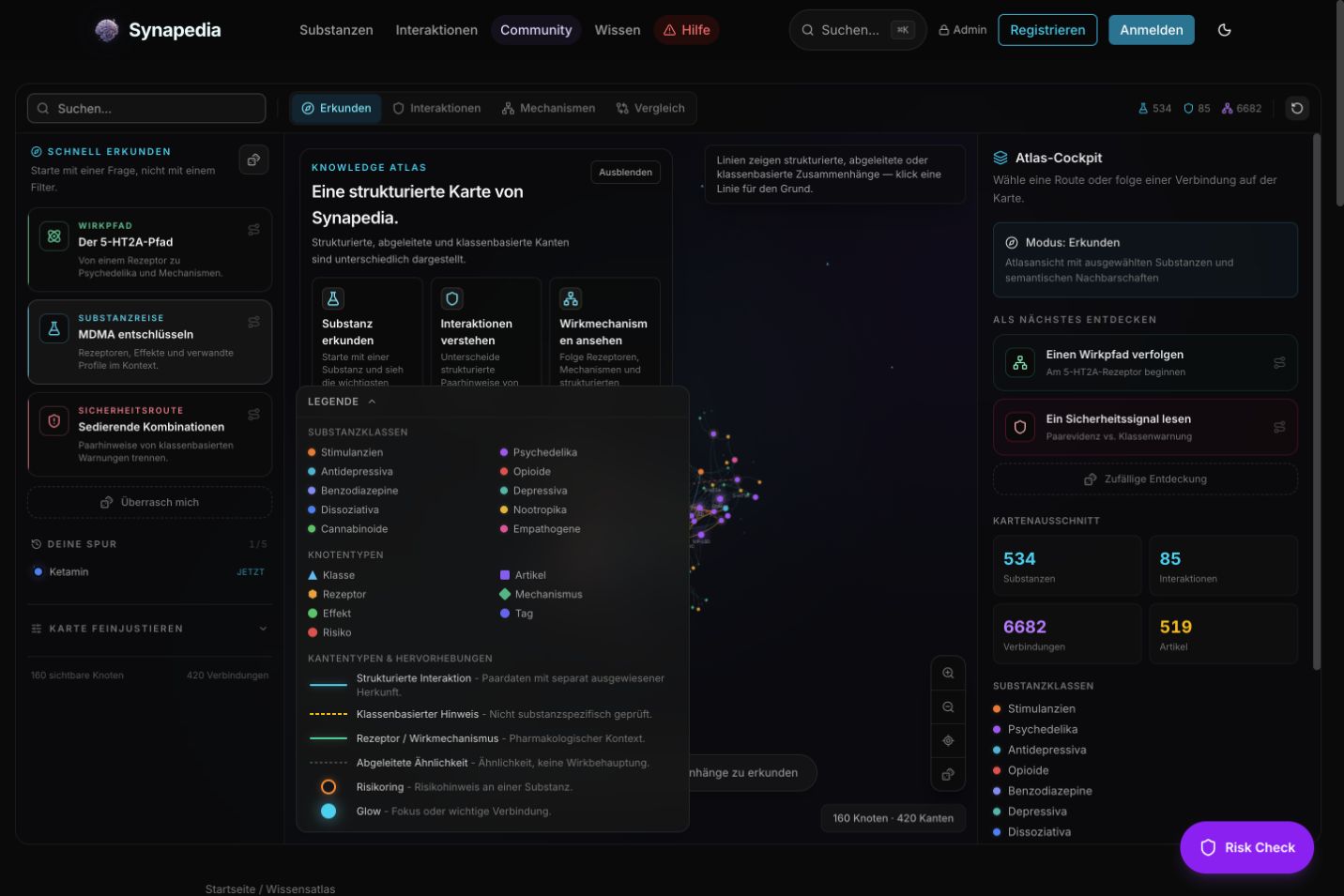
Make connections explorable.
Isolated facts do not explain a connection. The knowledge graph brings substances, targets, mechanisms and interaction warnings into an explorable interface. Each relationship offers a route to its underlying profiles and context.
Context. A map of recorded relationships, not a complete scientific knowledge base. The legend distinguishes different kinds of connections.
Existing product feature
Explore the knowledge graph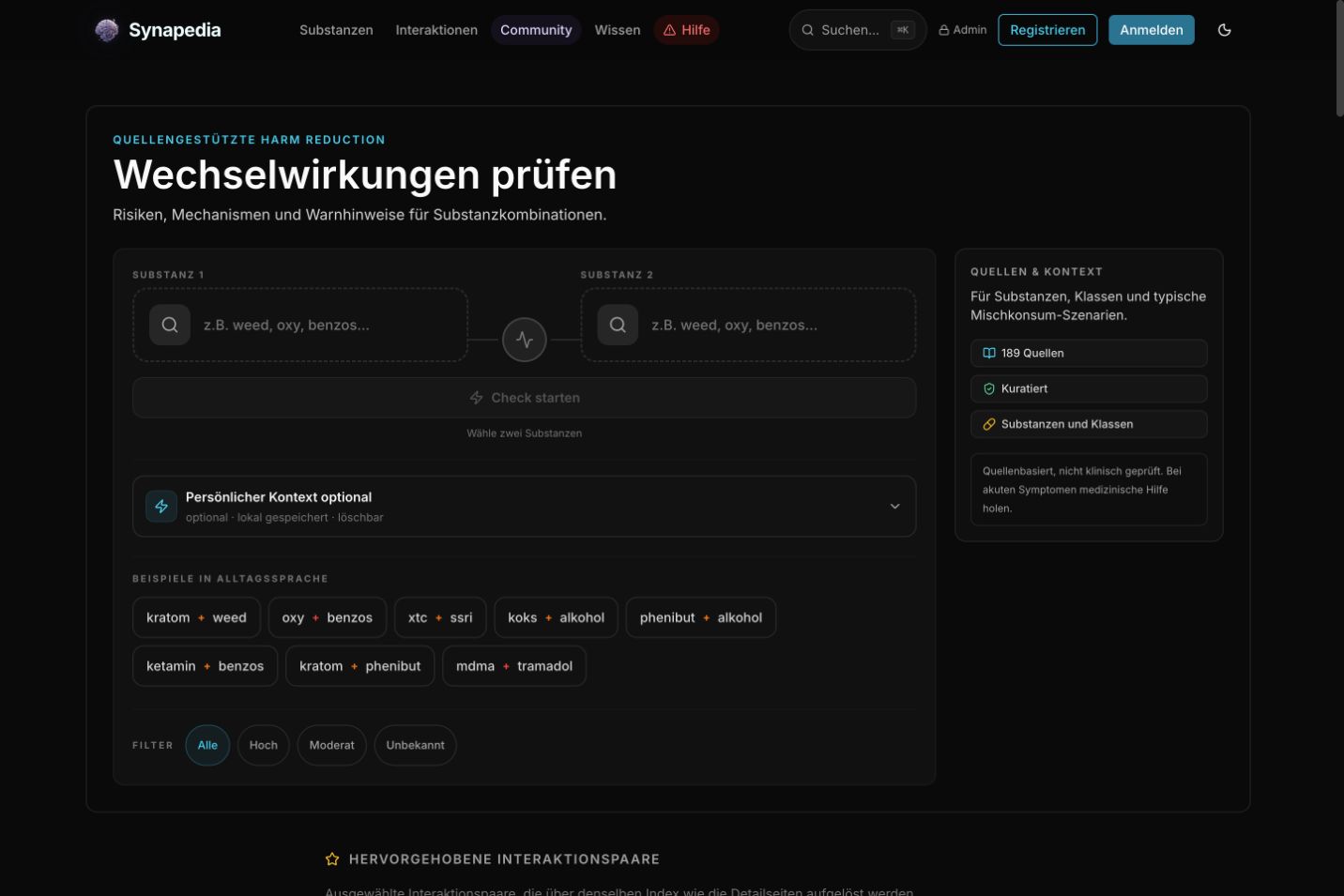
02 / Interaction checker
Understand risks in context.
Separate profiles can make combinations difficult to understand. The checker brings structured warnings together with their sources, origin and uncertainty. This helps explain the basis of an assessment and where its limits lie.
Context. Warnings may be class-based. They are not a personal medical decision tool or evidence of clinical validation.
Existing product feature
Explore the interaction checker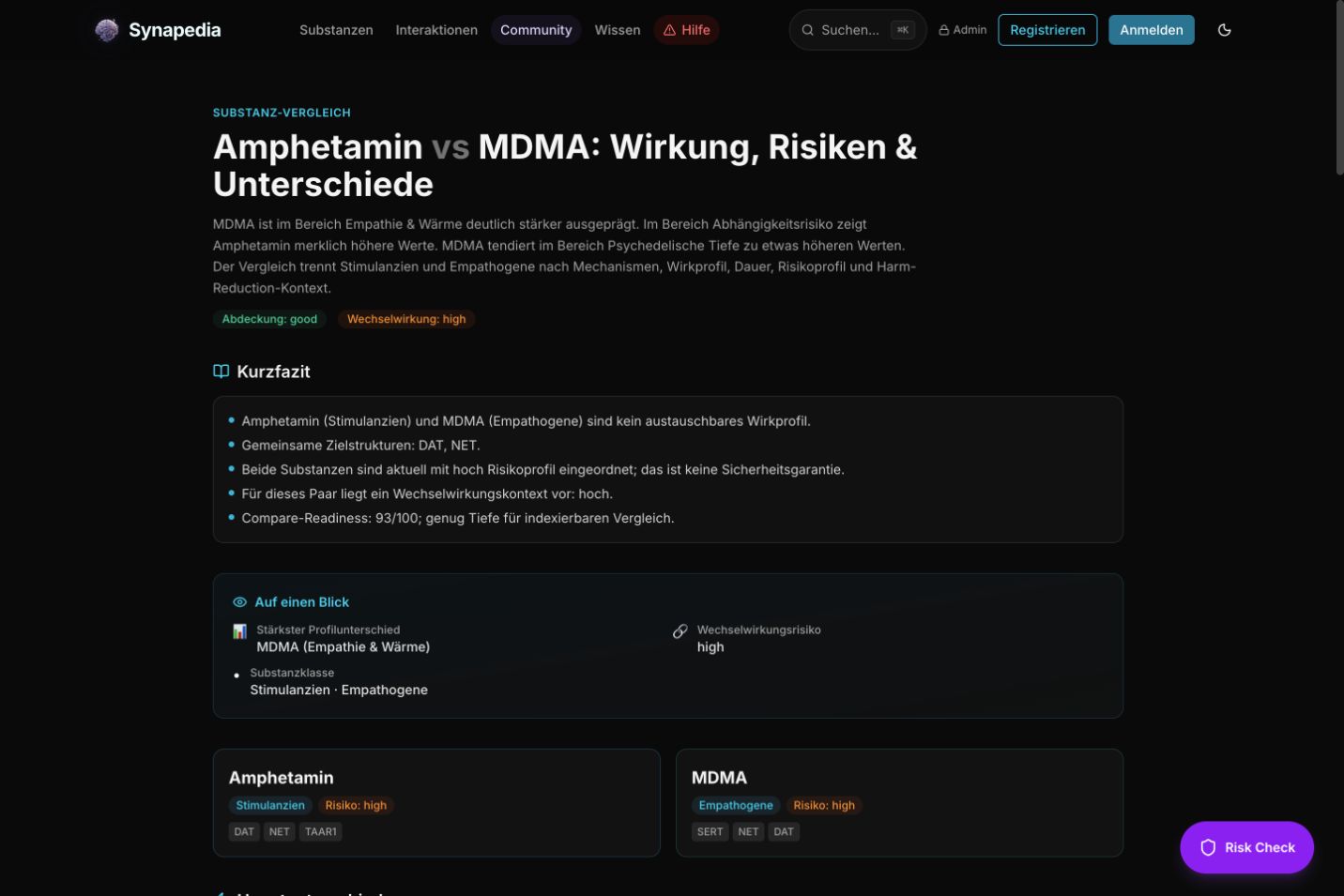
03 / Substance knowledge & comparison
Give information a shared structure.
Inconsistent descriptions make comparisons difficult. Synapedia organises profiles around shared fields and places them side by side. Differences, similarities and missing information remain visible. German and English access is part of this architecture.
Context. Data depth varies between profiles. A comparison does not establish that substances are safe or interchangeable.
Existing product feature
Open the comparison toolProduct development and technical architecture: Florian Lux. These examples document platform features, without implying sole personal authorship.
- 01
Keep sources in view.
Sources and review status are shown where they have been recorded. A populated data field is not evidence of scientific strength; neither is a structural quality score.
- 02
Make limits clear.
Class-based interaction warnings are not substance-specific clinical assessments. Missing information and uncertainty belong in the explanation. Personal experience remains a distinct kind of information.
- 03
Retain responsibility.
Automation helps structure and process information. It does not replace expert assessment. Specific reviews need to be identified on the relevant content; corrections and missing sources are welcome.
06 / Development
One step at a time.
Selected events from repository development. These dates record code changes, not public launches or individual contributions.
Repository history begins
View technical evidence
The repository history begins.
Repository commit:
4e53b18c5Interaction Checker
View technical evidence
Interactions become a dedicated, risk-oriented product area.
Repository commit:
e711ac142Substance comparison
View technical evidence
Structured profiles can be assessed side by side.
Repository commit:
30f872bfcKnowledge Graph
View technical evidence
An interactive interface visualizes nodes and relationships in the Knowledge Graph.
Repository commit:
7ae6d726eSearch-first explorer
View technical evidence
Navigation through substance knowledge shifts toward search and exploration.
Repository commit:
8716a5d9dEnglish homepage
View technical evidence
Multilingual access becomes visible on the central entry page.
Repository commit:
eb937fd77Community context
View technical evidence
Comments, votes, discussions, and community routes are introduced.
Repository commit:
c3e9f1e6dMission & trust
View technical evidence
The platform explicitly documents its principles, boundaries, and approach to quality.
Repository commit:
782579412
Planned
Developing how we work together.
Establish shared editorial workflows and document new contributions through visible results.
07 / Contact
Start a conversation.
Have subject-matter feedback, a source to suggest or an idea for collaboration? We welcome a concrete reason to talk — about knowledge, editorial work and technology.
Email the project